

Automotive fastener and bolted joint testing to drive innovation, improve quality/safety and streamline production
Article originally published in Fastener Technology International, October/November 2013 (“Testing” column). By Morten Schiff, Vibrationmaster, and Bernhard Reck, REC solutions in fastening technology.
Fasteners and bolted joints quite literally hold automotive designs, assemblies and the resulting completed vehicle together. So, a complete understanding of how they perform is essential to drive innovation, improve quality and safety and introduce production efficiencies in the automotive sector. Each of these aspects contributes to the competitive advantage of automotive original equipment manufacturers (OEMs). Fastener manufacturers who understand how their products can contribute to creating competitive advantage and can develop new fasteners to meet car makers’ needs can better serve their automotive OEM customers. Vibrationmaster’s Morten Schiff and REC solutions in fastening technology’s Bernhard Reck explain how automotive OEMs apply static and dynamic fastener and bolted joint testing methodologies to drive product, quality, safety and process improvements.
“The focus of downstream automotive OEMs is to reduce weight at the same time as increasing the performance of the fastener and bolted joint. Ultimately, this translates into less weight with higher clamp loads,” explains Reck, who provides test equipment, training seminars, research and consulting to leading automotive OEMs. “This emphasis on weight reduction can lead to product and materials innovations, which in turn impact on quality, safety and the production process. Ongoing fastener and bolted joint testing is required to ensure that the benefits of fastener innovation do not compromise production quality and efficiency, or vehicle safety.”
Dynamic testing has always played a core role in automotive design, and the use of bespoke test beds to assess the impact of novel fasteners and joints is increasing. Schiff explains, “Design innovations such as the use of new materials to reduce weight introduce complexities to how components interact. Standard fastener tests may not provide the level of insight fastener performance Design Engineers require. The solution is an increasing emphasis on dynamic testing, often using bespoke test beds, to deliver this understanding.”
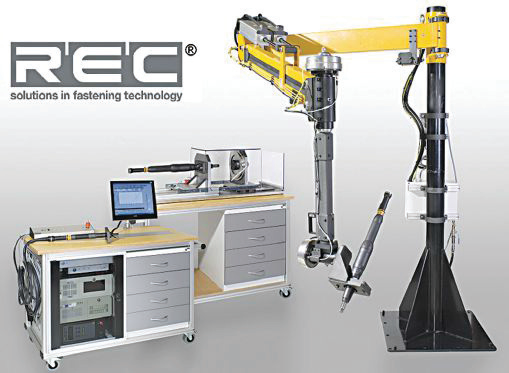
Automotive fastener and bolted joint testing standards
“To determine how the fastener and bolted joint will perform during assembly and subsequent operation, automotive OEMs comprehensively test the materials, coatings and manufacturing aspects of each fastener design,” continues Reck. “In addition to key fastener tests, such as those identified by ISO 898-1:2009 and other international standards bodies, most automotive OEMs have developed their own standards.”
Reck highlights Mercedes’ DBL, Volkswagen’s TL, Ford’s and General Motors’ Worldwide as just a few of the automotive standards that fastener manufacturers must meet to supply these customers. And he notes, “Each set of automotive OEM standards has its own fastener and bolted joint test requirements.”
Schiff adds that although similar and often based on existing and widely accepted international fastener test standards, automotive OEM tests may feature subtle differences that are included as a result of proprietary production processes and know-how. Schiff says, “An OEM may require a very specific torque tension test with unique parameters, because they relate directly to the processes on its production line and the capabilities of its workers.”
Standard tests for quality and production processes
Reck notes that the drive for less weight with higher clamp loads has resulted in an even greater focus on optimizing assembly process conditions: “To fasten a bolted joint to the maximum clamp load, the assembly line operator or robot needs to increase the clamp force up to the classification or yield point of the bolt within the joint, and not the nut.
“Most assembly lines do not have real-time yield point detection capabilities or any yield point measurement at all for that matter. As a result, understanding the friction coefficient of the entire joint—the bolt, nut and clamping surface—is of greatest importance. That is because the friction coefficient of the system controls the relationship between the applied torque and the clamp force received. So simple torque angle tests are important, but do not sufficiently describe the performance of a fastener and bolted joint.”
To determine the joint’s characteristics and optimize assembly line processes, a battery of tests is required. These include torque and rotation angle testing to analyze the stiffness of a joint or the yield point. Further analyses of the thread friction torque and clamp load are important for calculating the friction coefficient.
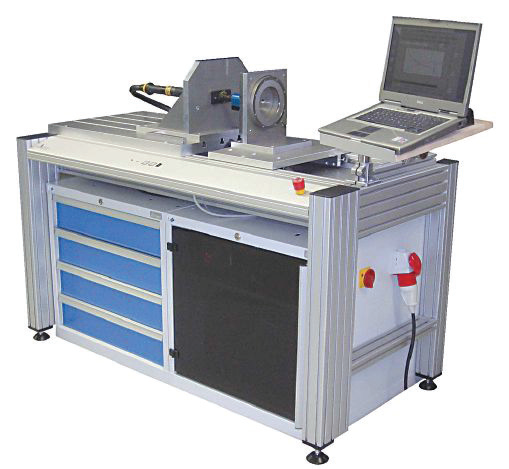
“Parts and sub-assemblies are sent out to test laboratories to conduct these tests before serial production. To confirm their performance characteristics under real production conditions, OEMs operate in-line monitoring departments. These run ongoing tests to determine the torque and angle, which conforms to the initial sample tests in the laboratory. If the data shows performance beyond the required tolerances, OEMs can take remedial action by controlling the friction coefficient of the fasteners,” says Reck.
Automotive fastener innovation has generated fresh testing challenges
The drive for innovative solutions to weight reduction and production process improvements has led to the introduction of new materials and new methods of using fasteners. Schiff explains, “Metals such as aluminum and magnesium, and a range of composite materials are being used for applications where components made from steel were the traditional automotive solution.
“Fasteners are also increasingly being incorporated into the functional element of product design, such as acting as conductors in e-bolt assemblies. These changes in materials and operating conditions have introduced a need for increasingly sophisticated testing to ensure the assemblies are performing as specified.”
Reck gives an example of how the changes in gear box construction require complex dynamic test beds: “Gear boxes are manufactured using aluminum. If the gear box is fastened to the aluminum housing of the engine by fasteners made from aluminum, then the system works.
“But problems arise if a steel fastener is used. During the operation of a vehicle, the joint will become hot, rising to temperatures of 302°F (150°C). The aluminum elongates, but the steel does not. This leads to a space increase in the joint. Then as the engine cools, the aluminum contracts, but the steel does not. The result is leakage around the joint.”
A compensation mechanism is required, which then needs testing within a dynamic test rig.
Reck continues, “Solutions include using washers or a fastener that elongates as the temperature changes. To test the solution, a bed to conduct assembly torque tests and measure clamp load under actual heating and cooling conditions experienced during operation is needed. In practice, this requires a bespoke dynamic test bed solution that includes load cells to measure the clamp load movement during heating and cooling.”
Incorporating fasteners as live components
Alongside the adoption of new materials, Design Engineers have incorporated fasteners within the application design itself. This practice is becoming more common, particularly in automotive electronics with features such as e-bolt assemblies where the fastener is an integral element of the electronic circuit design.
According to Reck, this brings further challenges: “Vehicle cables and connectors can have up to 800 V running through them during normal operating conditions. If high voltages are running through an e-bolt assembly, the fastener can become hot and in a worst-case scenario could cause ignition.
“In this context, we need to understand what happens to the electrical resistance after the bolted joint has been assembled, what happens to the bolted joint’s performance as current flows through the fastener and as its temperature increases and also the impact on the fastener’s performance over the long term.”
Reck’s test solution for automotive OEMs is another bespoke test bed incorporating a range of sensors to test what happens to the clamp force and resistivity. The tests include torque testing, load cells to monitor clamp force and a channel feeding into the test software to monitor the electrical resistance of the e-bolt assembly.

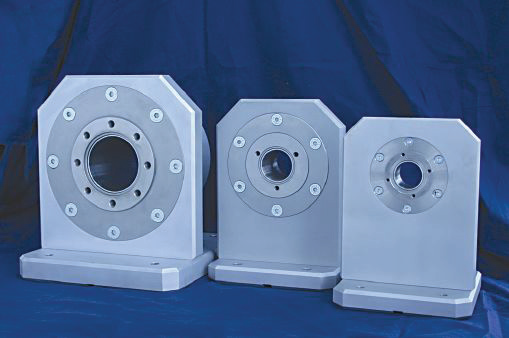
The importance of dynamic fastener testing
A feature of fastener and bolted joint testing within the automotive sector is dynamic testing. According to Reck, this approach subjects fasteners and bolted joints to simulated operating conditions. It will also feed back into quality, safety and optimizing manufacturing processes.
In practice, dynamic testing usually involves placing the completed components in a vibration test rig, fixing the bolted joints and subjecting the automotive component, sub-assembly or even an entire vehicle to a range of vibration conditions. The test rig may also include environmental management capabilities, so parameters such as temperature and humidity can be introduced and tested.
“The objective of dynamic fastener testing is to monitor the break loose and further on torque, which is the point at which the fastener begins to move within the bolted joint, and to identify whether relaxation or creeping of the bolted joints occurs under simulated operating conditions,” explains Reck. “The test should determine the relationship between the original clamp load and the clamp load after testing. Understanding this relationship is essential to understanding how the fastener and bolted joint will actually perform when operating.”
Schiff suggests that in practice all automotive OEMs conduct fastener and bolted joint tests all of the time: “Without the right test equipment and a rigorous test program, automotive manufacturers would otherwise launch vehicles that suffered breakdowns because of simple and avoidable fastener failures.”
Reck acknowledges that fastener design engineers don’t have to conduct fastener tests to the same degree as automobile design engineers. But he believes that they do have to understand emerging materials and technologies, and would benefit from training on different types of assemblies, new fastener applications and on the tests the fasteners they design will have to undergo.
Reck concludes, “Fastener and bolted joint testing within the automotive sector underpins vehicle safety and quality, and is a vital tool to optimize production processes. Fastener testing also contributes to developing and validating innovation and can be a source of competitive advantage to automotive OEMs.”
Co-author: Bernhard Reck, REC Fastening GmbH, Breidenbach – independent fastener and bolted joint design, calculation and mechanical analysis services, bespoke testing rigs, training and seminars. www.rec-engineering.de
Download the original article: Fastener Technology International, October/November 2013 (PDF)
