
The best bolted joints are designed, not discovered. The R-Series exists for engineers who refuse to let a standardised specimen speak for their product.
A Junker test compares locking elements under standardised conditions. Your joint is not standardised. It has its own parts, its own surfaces, its own friction, its own preload — and in service it will see a transverse shear force that is particular to your design. The R-Series applies that force, under closed-loop control, through the joint itself.
The principle is what sets the methodology apart: the platform controls force, and observes the joint. The slip you measure is the joint’s answer, not the instrument’s input.
Before the first slip
A Junker test imposes the full test displacement from the very first cycle. Service is rarely so brutal. In the real joint, transverse shear force may at first cause no slip at all. Then load rises, temperature shifts, surfaces settle — and the first slip occurs. Repeated, it becomes full joint slip: the available friction force between the clamped parts (µ × clamp force) is overcome, the friction balance changes, and rotational self-loosening begins — driven by the helix angle of the thread and the remaining clamping force, which now acts as a spring pressing outwards.
The R-Series is built to find the force level before that first slip — the maximal transverse shear force your joint can carry and still stay still. That number, not a comparison mark, is the value you can design with.
What the platform sees
Two measurements, read together, tell the story. Ultrasonic sensing tracks the clamping force in the fastener. The SenseVision AI camera watches the fastener head itself, detecting the first fractions of a degree of anticlockwise rotation. The timing between the two is the diagnosis:
- Clamping force falls, no rotation — the joint is settling: embedding, creep, relaxation.
- Clamping force falls and rotation begins at the same moment — rotational self-loosening.
- Clamping force falls first, rotation follows later — embedding has lowered the clamping force until self-loosening could begin.
Three different failure modes. Three different design answers. One test.
One platform, both methods
The R-Series controls either transverse shear force, in newtons, or transverse displacement, in millimetres. In force control, it validates your real joint. In displacement control, it runs as a fully standardised Junker test instrument. Each platform is therefore usually delivered with two test fixtures: one for the Vibrationmaster Universal Specimen Carrier, and a Junker test fixture with roller bearings and clamping force sensor. Real-joint validation and standardised comparison — one platform.
How a validation runs
Your joint arrives as it is built in production — your parts, your fasteners, your assembly process. Carried in the Vibrationmaster Universal Specimen Carrier, it enters the platform and is loaded exactly as service will load it. Transverse shear force rises under closed-loop control, ultrasonic sensing tracks the clamping force, and SenseVision watches the joint for the first sign of rotation. The result is not a pass mark against someone else’s specimen. It is the validated behaviour of your joint.
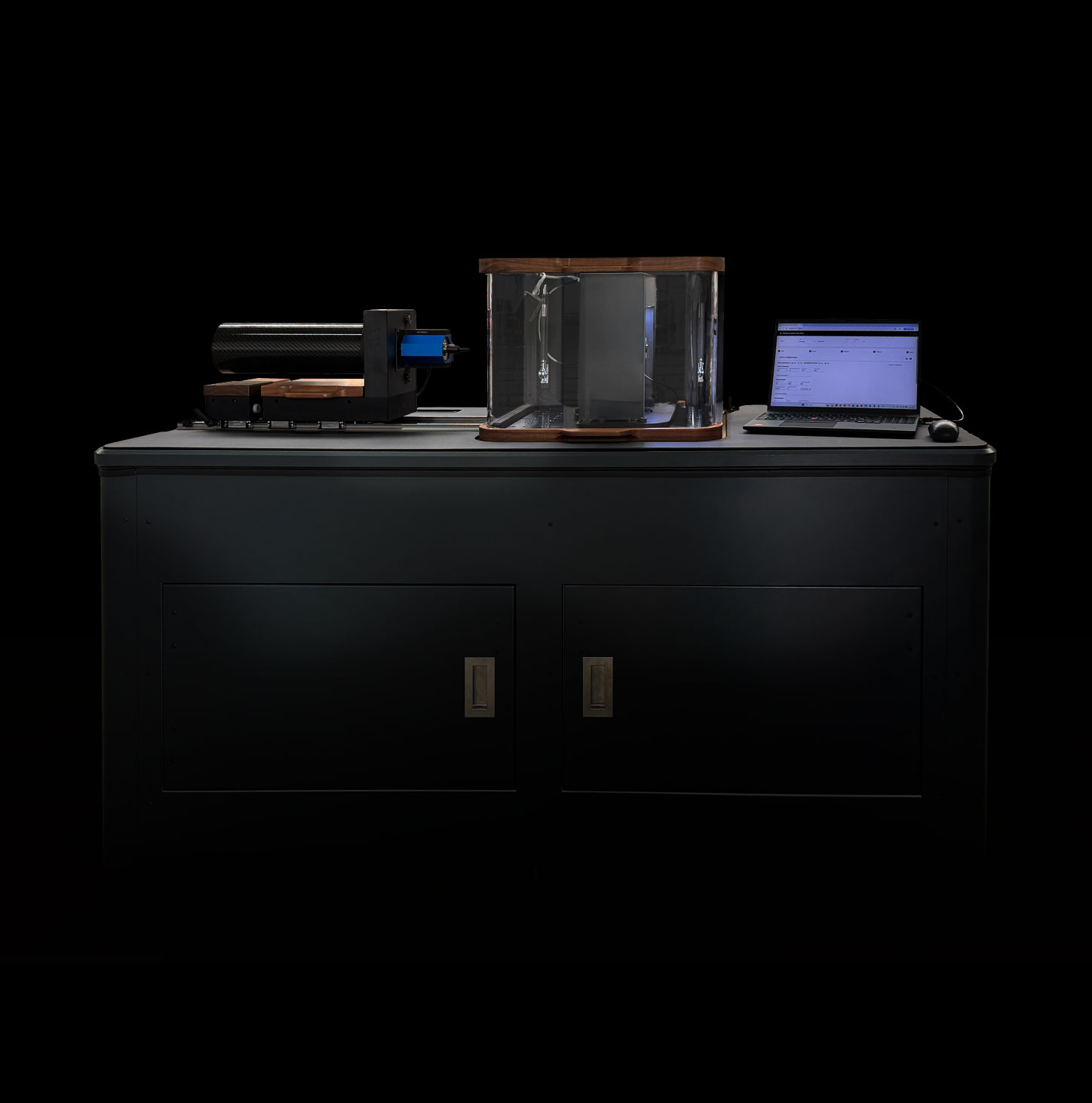
R12X-15
The reference platform of the series. Built for development and validation work across the fastener range of demanding products — and proven in service with some of the most exacting engineering organisations in the world.
Request details
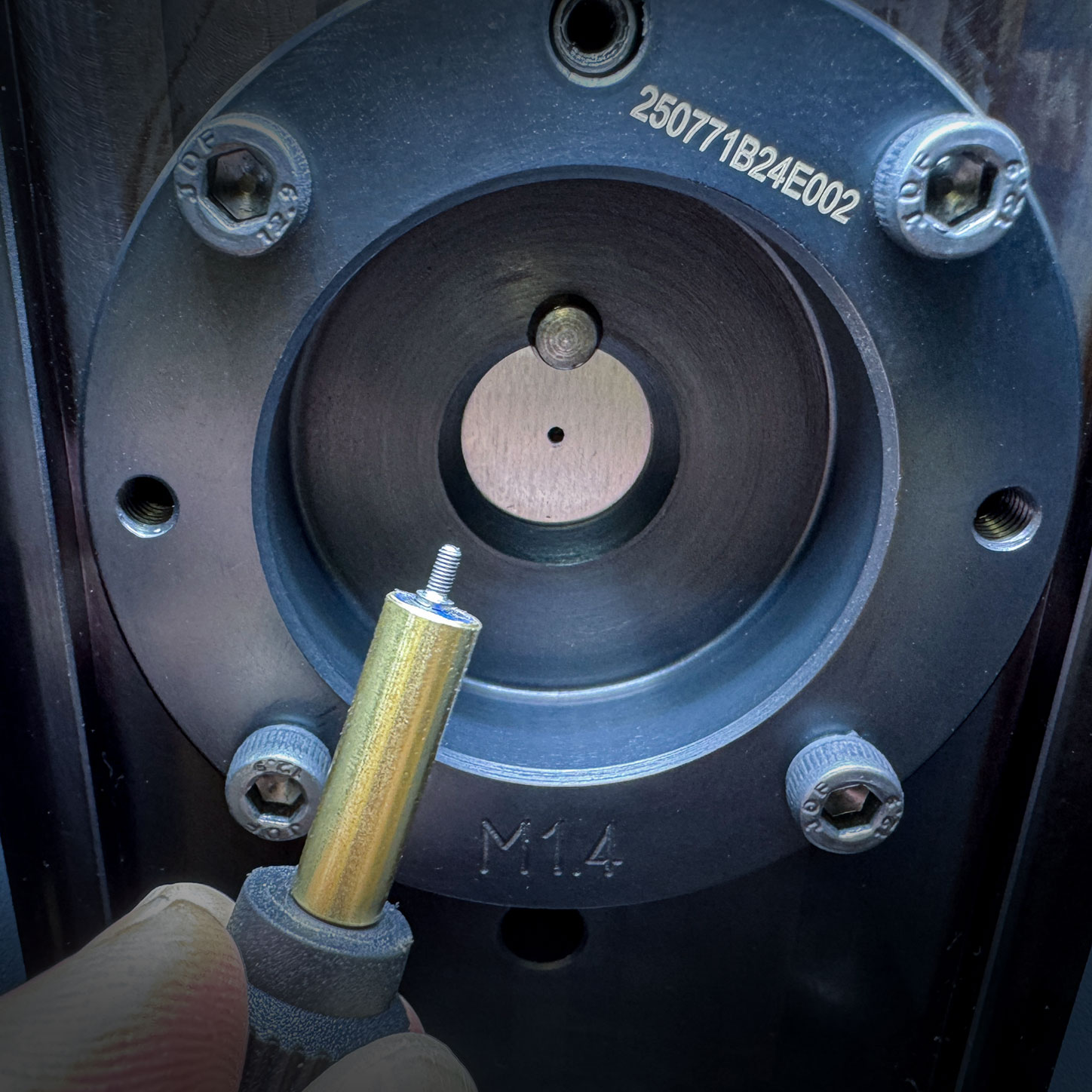
R3X-5
The precision platform for small screws. Where preloads are measured in tens of newtons rather than tens of kilonewtons, force control and sensing must be matched to suit. The R3X-5 brings real-joint validation to the smallest screws — all below M3 that no desktop instrument can measure honestly.
Request details

The Vibrationmaster Universal Specimen Carrier (USC)
The USC is what makes the real joint testable. Your production parts are assembled into the carrier off the platform — at your pace, in parallel, in numbers. For adhesive-secured joints, cure happens in the carrier, away from the platform, so platform time is spent testing rather than waiting. A fleet of carriers turns one platform into a validation programme — and for validation at production scale, USC handling into and out of the platform can be fully automated.
Request details
Engineered to order
No two R-Series platforms are identical, because no two products are. Each platform is sized to your fastener range and your force levels — no over-design, no under-design.
Tell us about the joint you're designing. We'll guide you from there.
Start the conversation