
Trusted where failure is not an option.
Our customers are the most demanding organisations in the world. They come to us with questions that have to be answered with certainty, because what they build must not fail.
For many, the question concerns a bolted joint: is it safe and reliable in service? Some need locking elements compared under a standard the whole industry recognises. Some need to know the transverse shear force their real joint can carry before the first slip. Some need to know what effect embedding, creep, relaxation and thermal influences have on their bolted joints over weeks and months. For others, the question is motion and force: an actuator drive that positions to sub-micron accuracy, at force levels from the very low to the very high. When we understand the question, we bring the answer.
We help our customers to answer these questions with evidence — measured on their own joints, proven in their own machines, in numbers that hold in front of a certification body, a customer, or their own engineering review. And some arrive with a requirement not yet fully defined. We build the answer with them.
Trusted where failure is not an option.



































Who trusts us with their questions

Aerospace, space and defence
A joint is qualified once, on the ground, and then it flies. Titanium through composite and aluminium, thermal extremes, rocket launch vibration lasting minutes. In an unmanned defence aircraft, the airframe builds static charge in flight — and a discharge across a joint that has lost its clamping force can disturb navigation, or worse. This is the time for certainty — not assumptions. Our customers in this sector come to us for that certainty — measured on their own joint.

Automotive, motorsport and heavy equipment
Steel fasteners in aluminium and magnesium, engine bays that freeze overnight and bake by noon, and joints that must stay tight by intention, not by margin — because every added part is weight, cost and a process step. On our platforms, engineers see where their joint's first slip lies against the load it will see on the street or race track, and design to that number.

Electronics and semiconductor equipment
Screws from M1 upwards, preloads of tens of newtons, and a few microns of embedding that can consume the entire clamping force. In consumer electronics shipped by the million, a joint can lose its clamping force to embedding before the product is ever switched on — and the cost is not the repair. It is the reputation, judged in public within hours. Structural assemblies that must hold their precision for years. No standardised test reaches these joints. Some fail by rotation; some lose clamping force with no rotation at all. Our customers come to us to know both — on the real joint, after dynamic loading, and after years.

Energy and rail
Solar mounting hardware in wind, rain and salt. Switchgear where a loose connection is a fire. Bogie and body joints that vibrate for decades between inspections — the environment DIN 25201 was written for. These joints are tested before installation because they cannot be tested after. Our customers come to us for the loosening curve and the residual clamping force to DIN 25201-4 and ISO 16130 that an operator's approval rests on — and, on the real joint, for the force level the design can carry.
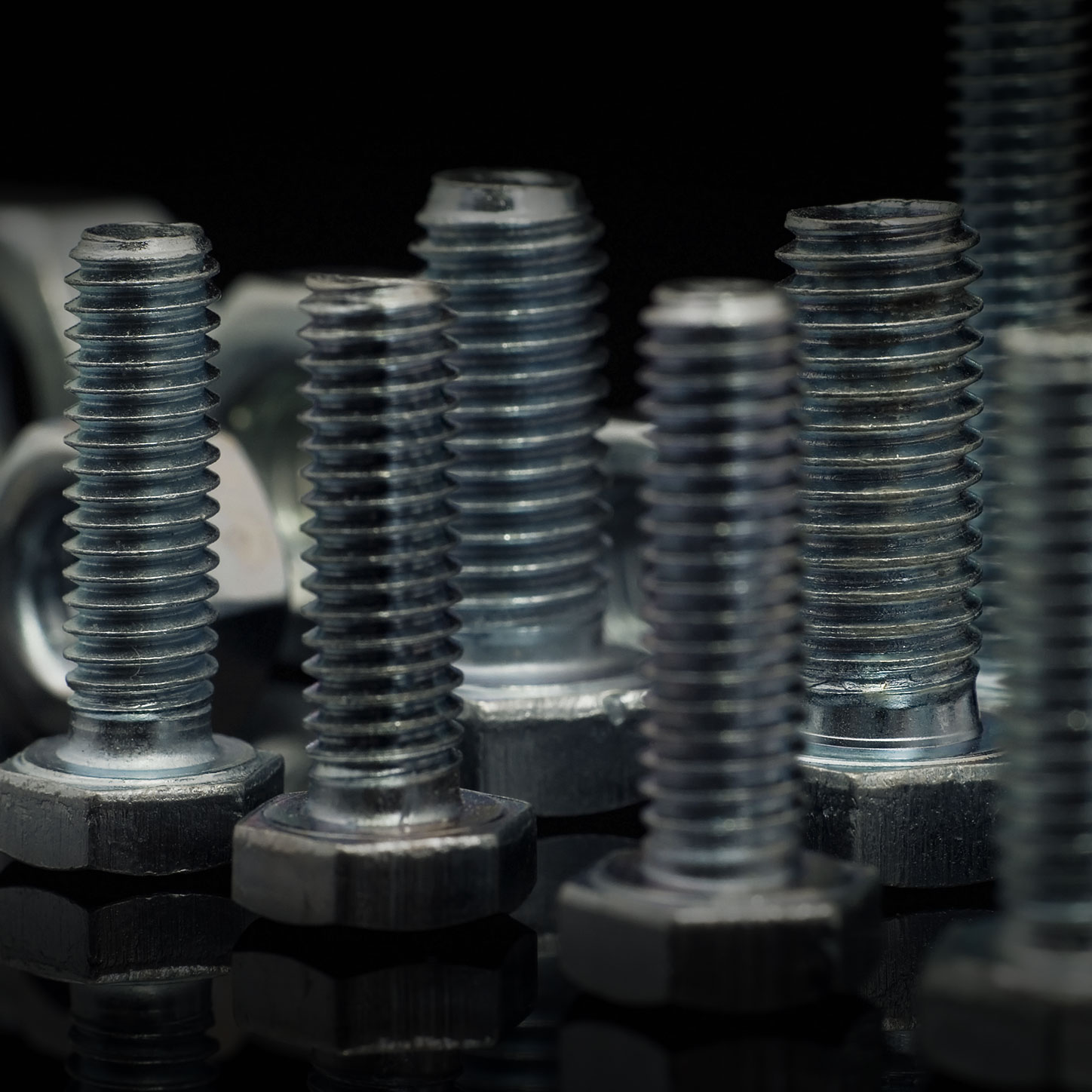
Fastener manufacturers and locking element specialists
Our largest group. Wedge lock washers, prevailing torque nuts, ribbed and serrated flange elements, thread geometries, coatings and adhesives — benchmarked against the competition to DIN 65151, DIN 25201-4 and ISO 16130. They test on Vibrationmaster because their customers do. A performance claim proven on the reference instrument is a claim the customer can reproduce on the same instrument. That is what makes it a claim.

Research institutes and universities
A university chair for joining technology and assembly, researching how bolted joints self-loosen and contributing to the standards that govern their testing. An industrial technical centre testing for its member companies on a Vibrationmaster platform. Research done on the instruments industry uses transfers directly into practice — and much of what the industry knows about self-loosening was established on ours.
“We have already gained a lot of knowledge using your machine.”
Clark Andrews, Boeing
Bring us the question that has to be answered with certainty. Talk to the people who build the technology.
Start the conversation